
About input.jpg: Chinese New Year's Eve in Suzhou and Public Domain Photos
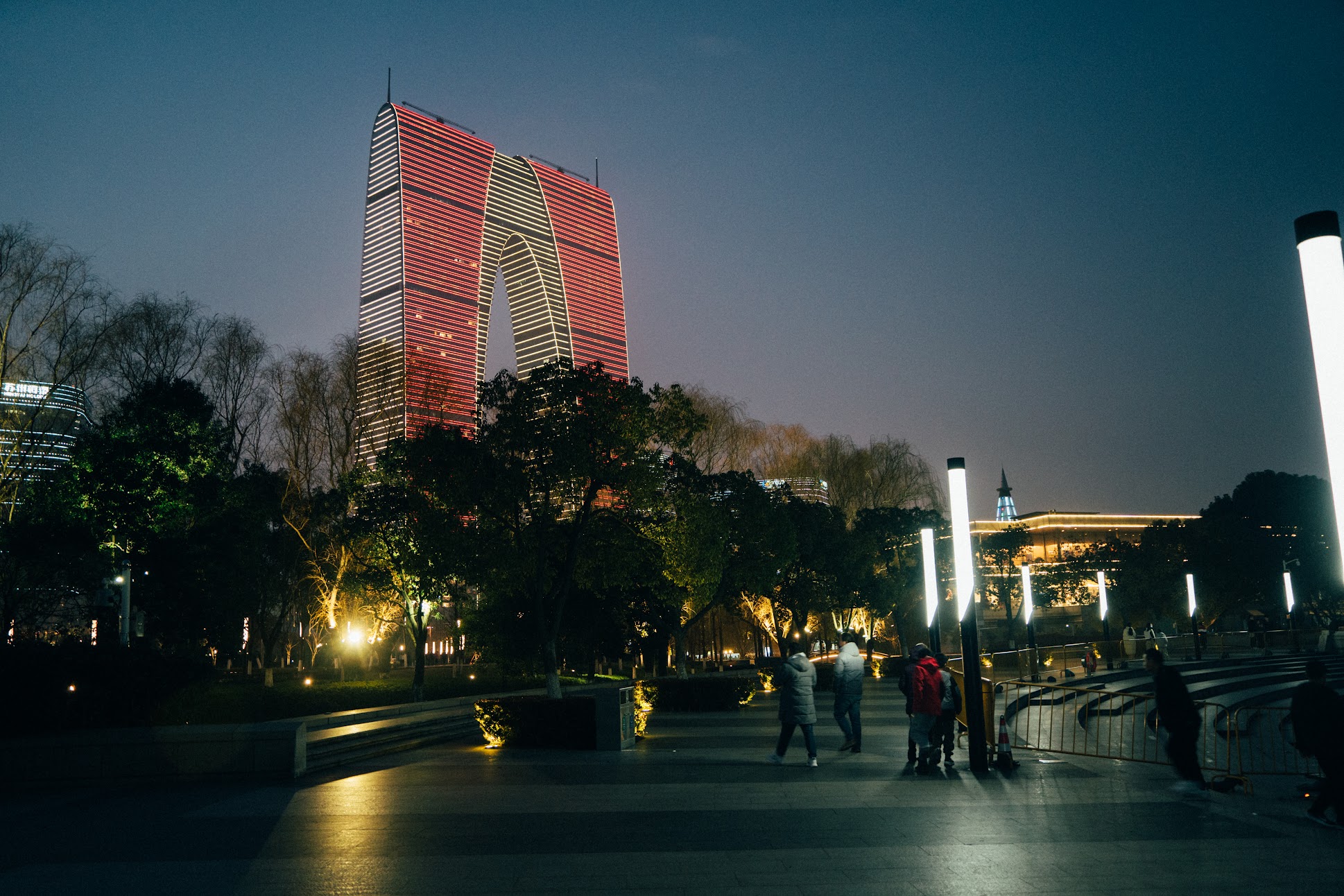
As you work through the Recipes in this handbook, you will see the same night photograph of Suzhou’s Gate of the Orient in nearly every geometry, colour, compositing, and encoding example: input.jpg. This page shares the story behind that photo and its two companion shots from the same evening (input2.jpg and input3.jpg), why it serves as our primary test image, and its unconditional public-domain dedication.
Behind the Shots: Chinese New Year’s Eve in Suzhou
Section titled “Behind the Shots: Chinese New Year’s Eve in Suzhou”All three photographs were taken by project author Nova Kwok on the evening of February 9, 2024 — Chinese New Year’s Eve.
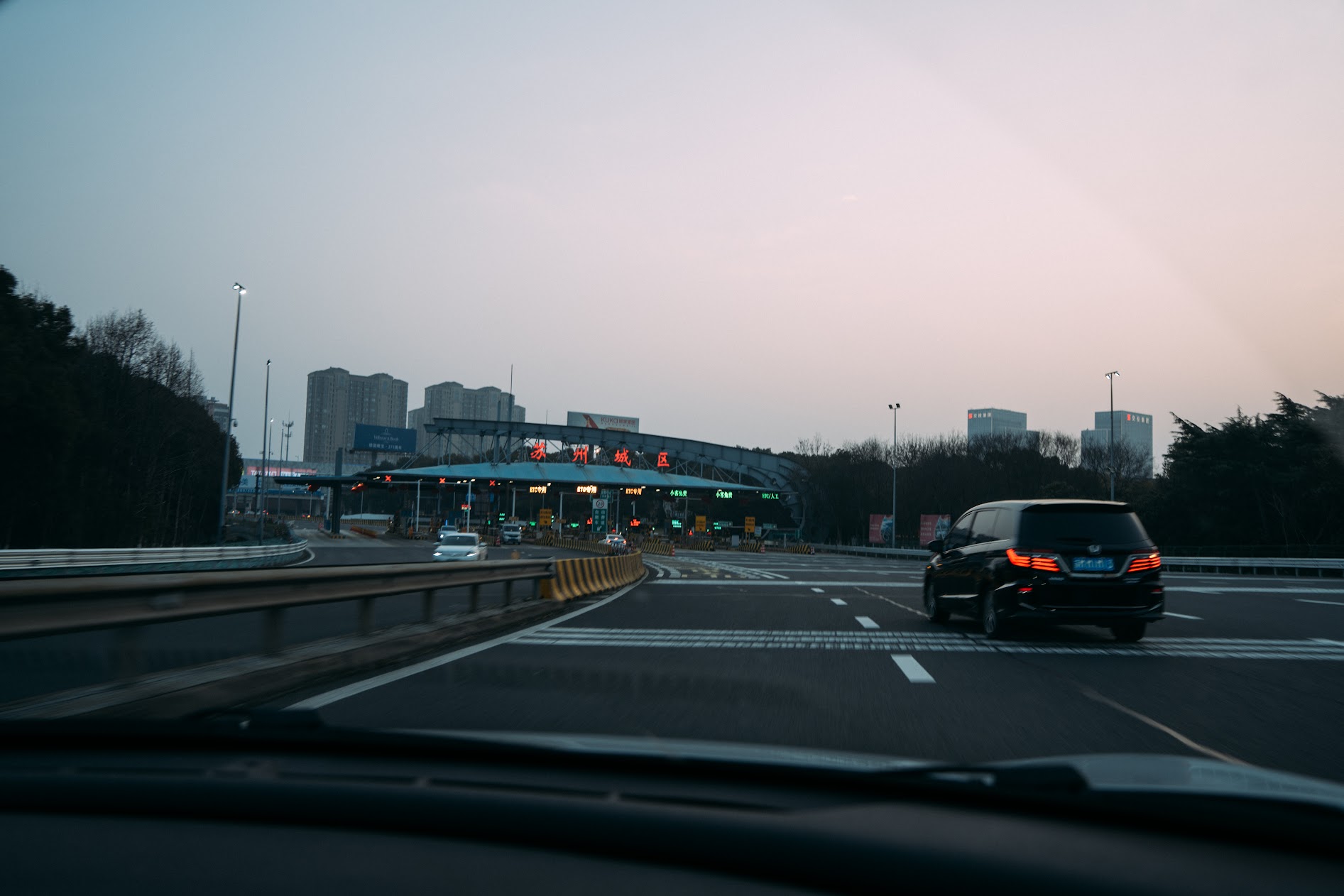
That afternoon, Nova drove from Shanghai to Suzhou on a whim, planning to enjoy the evening breeze by Jinji Lake and have dinner in the city. Reaching the “Suzhou Urban Area” (苏州城区) highway toll plaza at 17:31 as dusk settled in, the highway was already noticeably quiet (input2.jpg below).
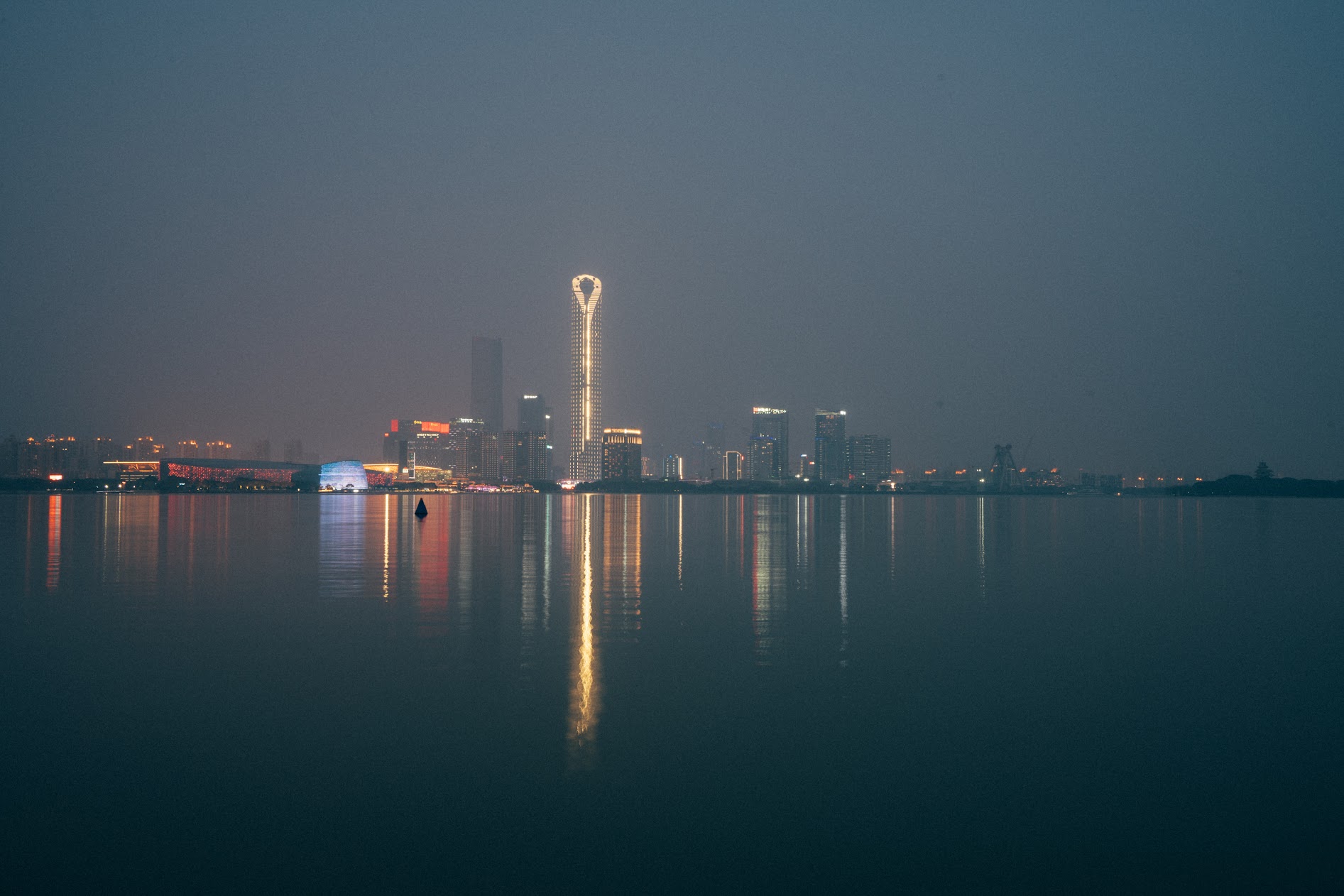
By 18:03, night had fallen over Jinji Lake. Through the winter mist, the Gate of the Orient and the surrounding skyline lit up in warm amber and cool blue, casting long vertical reflections across the calm water (input3.jpg). Walking closer to the plaza in the chilly February wind, Nova captured the upward view of the red-and-white illuminated arch that became input.jpg.
Then came the twist of the evening: because it was right on Chinese New Year’s Eve, every single restaurant around the lake and nearby streets had already closed early for the holiday reunion dinner. After walking around in the cold without finding a single open place to eat, Nova had no choice but to get back in the car hungry and drive all the way back to Shanghai just to have dinner.
That hungry detour to Suzhou left behind these three frames — and input.jpg went on to become the signature real-world test image across the handbook.
Why This Photo Works for Pipeline Testing
Section titled “Why This Photo Works for Pipeline Testing”In image-processing documentation, a useful test fixture needs pixel characteristics that make pipeline behaviour immediately visible:
- Asymmetric composition and crisp geometry: In
input.jpg, the brightly lit skyscraper sits in the upper-left quadrant while dark sky and winter trees occupy the right. That off-centre layout makes it easy to tell apartfitversuscoverresizing, entropy-based versus attention-based smart cropping, and canvas expansion during rotation. - High dynamic contrast alongside fine detail: The frame combines a deep indigo night sky (smooth low-frequency dark regions that expose quantization banding and chroma subsampling artifacts), saturated red LED strips (which stress gamut clipping and colour-space conversions), and bare winter branches and vertical lamp posts in the foreground (high-frequency edges that highlight Gaussian blur, unsharp masking, and Lanczos3 ringing).
- Clean, reproducible metadata baseline: All three files are 8-bit 3-band sRGB JPEGs with an embedded
sRGB IEC61966-2-1ICC profile (3,048bytes),4:2:0chroma subsampling, and no EXIF orientation tag that would silently swap dimensions before geometry operations.
Technical specifications of the three photos
Section titled “Technical specifications of the three photos”| Filename | Public asset path | Dimensions | Byte size | EXIF timestamp | Scene description |
|---|---|---|---|---|---|
input.jpg |
/generated/fixtures/input-photo.jpg |
1938 × 1292 |
610,191 bytes |
2024-02-09 (night) |
Upward plaza view of the Gate of the Orient (primary benchmark photo) |
input2.jpg |
/generated/fixtures/input2-photo.jpg |
1893 × 1262 |
190,143 bytes |
2024-02-09 17:31:11 |
Approaching the “Suzhou Urban Area” highway toll plaza at dusk |
input3.jpg |
/generated/fixtures/input3-photo.jpg |
1893 × 1262 |
232,633 bytes |
2024-02-09 18:03:16 |
Jinji Lake skyline and reflection of the Gate of the Orient |
Copyright Waiver: Free for Any Use
Section titled “Copyright Waiver: Free for Any Use”Anyone who likes these photos is welcome to download, copy, modify, crop, re-encode, redistribute, or use them for any personal, open-source, or commercial purpose — such as testing your own image pipelines, writing blog posts, or using them as wallpapers and demo assets — without asking permission and without attribution required.
For the license split covering the handbook’s prose, example code, and other visual assets, see License and asset attribution.